Christmas Email Greetings for Clients, Customers and Employees: 52 Messages, 12 Subject Lines and Sign-Offs
52 Christmas email greetings for clients, customers, partners and staff, plus subject lines, sign-offs, out-of-office replies and the CAN-SPAM rules.
By GreetingBirds EditorsPublished October 13, 202614 min read

A Christmas email to a client is the shortest piece of business writing you will send all year, and the one people judge most quickly. It gets a glance, not a read. If the first line sounds like a template, it goes in the same mental pile as the eleven other "Season's Greetings from all of us at…" emails that arrived that morning.
The short answer: write a subject line a person would write, open with the person's name, thank them for one real thing from this year, wish them a good break, and sign with your own name. Leave the sales pitch for January. If you need something to paste right now, these five lines work for almost any client, customer or partner:
- Thank you for working with us this year. Wishing you a merry Christmas and a restful break.
- It was a pleasure to work with you in 2026. Warm wishes to you and your team for the holidays.
- Thank you for your trust this year. We hope you get some real time off, and we look forward to January.
- Merry Christmas from all of us, and thank you for making this a good year to come to work.
- Wishing you a peaceful holiday season and a strong start to 2027. Thank you for your business.
Below you'll find a four-part way to build the email, 12 subject lines, and 47 more messages (52 in all) sorted by who receives them: clients you know by name, a whole customer list, business partners and suppliers, your own employees, mixed lists that need a holiday-neutral tone, and out-of-office replies. After that come the mistakes that make a greeting look like spam, and what the US anti-spam law says about holiday emails that also sell something. Every message was written by our editors and is free to copy.
The Four Parts of a Holiday Email (and Where Most Go Wrong)
A greeting email has the same skeleton as any good business email. The difference is that each part should be smaller than you think.
- Subject line: plain words that say who it's from and that it's a greeting. "Merry Christmas from [Your Company]" beats "OUR BIGGEST THANK-YOU EVER!!!".
- Opening: the person's first name, or "Hi [Team Name] team" for a group. Skip "Dear Valued Customer". It tells the reader they are one of thousands.
- One specific sentence: something from this year that only applies to them. A project, how long they've been a customer, a hard deadline you met together.
- Wish and sign-off: one line about the break, then your name. Not the company logo alone.
Worked example (for a client you worked with on a website relaunch):
Subject: Merry Christmas, and thank you
Hi [Name],
Thank you for trusting us with the relaunch this spring. Seeing it go live two weeks early was the highlight of our year.
Wishing you and your family a merry Christmas and a quiet, offline break. Talk in January.
Warm regards,
[Your name]
That is 48 words. Notice what's missing: no recap of services, no "as we look back on an incredible year of growth", no link to book a call. Swap the middle sentence for something true about your own client.
The etiquette writer Emily Post made the same point a century ago, when business mail still arrived by hand:
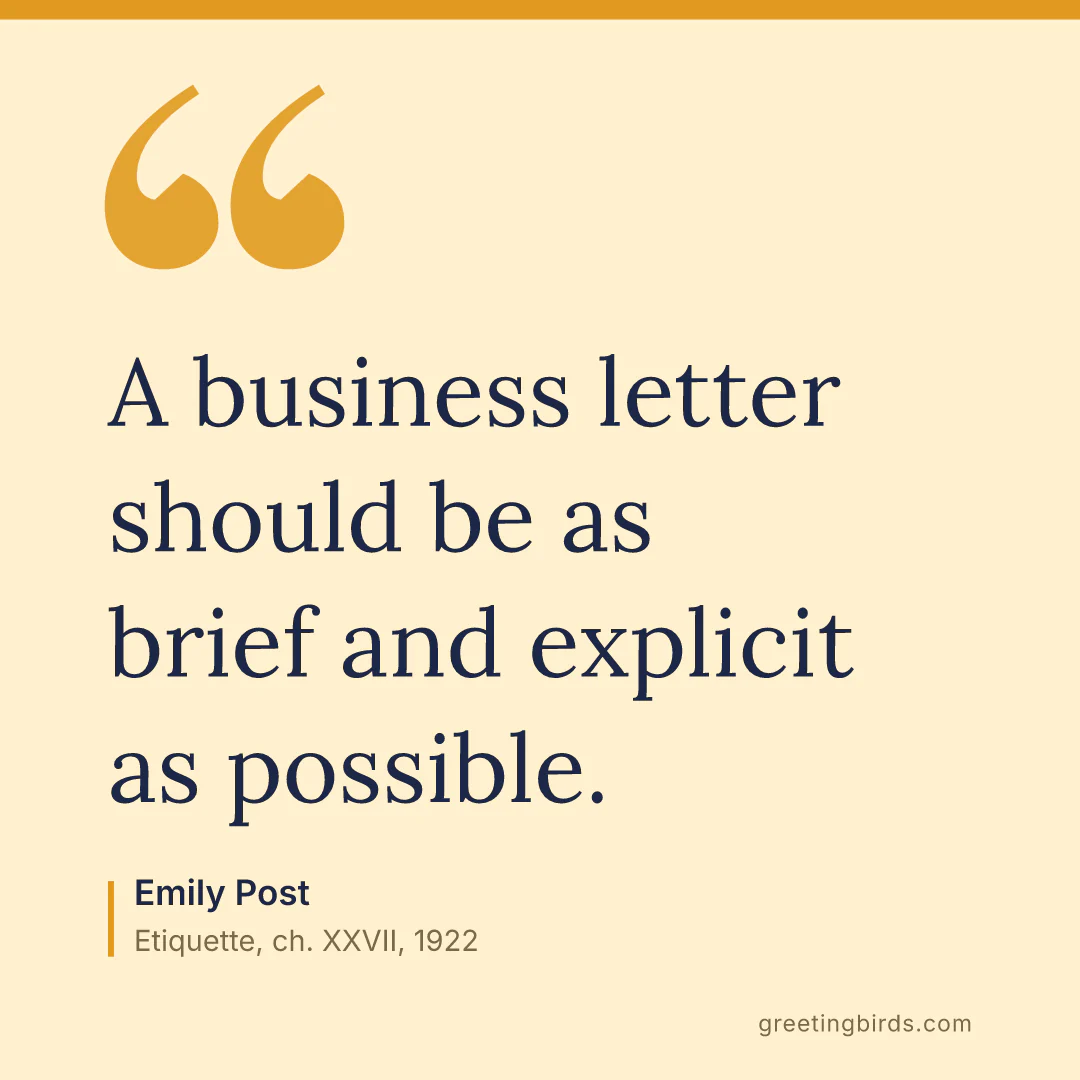
"A business letter should be as brief and explicit as possible." — Emily Post, Etiquette, chapter XXVII, "Notes and Shorter Letters", 1922
Post was writing about order letters and replies, but the rule fits holiday emails even better. A greeting is "explicit" when the reader knows within one line who sent it and why. If your email needs a second scroll, cut it until it doesn't.
12 Subject Lines That Read Like a Person Sent Them
Spam filters and tired readers both react to the same things: all caps, rows of emoji, "FREE" and urgency words. A greeting with a calm subject line gets opened because it looks like it came from someone you know. Use your company name or your own name in it whenever you can.
- Merry Christmas from [Your Company]
- Thank you for 2026, [First name]
- Happy holidays from all of us at [Your Company]
- A quick thank-you before the break
- Season's greetings, and see you in January
- Merry Christmas from [Your name] and the team
- Our office holiday hours (and a thank-you)
- Warm wishes for the holidays
- Thank you for a great year together
- Happy holidays, [First name]
- From our team to yours: happy holidays
- Before we all log off for the year
Keep the subject under about 50 characters so it isn't cut off on a phone. And make it honest: if the email also announces a sale, a subject line that only says "Merry Christmas" hides what's inside, which is the kind of thing the anti-spam rules further down care about.
For Clients You Know by Name
This is the email worth spending five minutes on. Write each one yourself, or at least add a personal sentence to the template. Clients notice the difference between a mail merge and a note, even when the note is two lines.
- Thank you for a year of good work together, [Name]. Merry Christmas, and enjoy every minute of the break.
- Working with your team on [project] was one of the best parts of my year. Wishing you a merry Christmas.
- Three years in, and you're still one of my favorite people to get an email from. Happy holidays, [Name].
- Thank you for your patience during the busy fall and for trusting us with the tricky parts. Have a wonderful Christmas.
- Merry Christmas! I hope the new office is everything you wanted, and that you get a few days away from it.
- Thank you for recommending us to [referral] this year. It meant a lot. Wishing you a joyful holiday season.
- Wishing you and your family a merry Christmas. Thank you for being so easy to work with, even on deadline days.
- Happy holidays, [Name]. Thanks for every quick reply and every "looks good, go ahead." They made our year easier.
- Merry Christmas and happy new year. We're already looking forward to what we'll build together in 2027.
Christmas Greetings to a Whole Customer List
When the email goes to hundreds or thousands of customers, you can't name a project. Name the relationship instead: how long they've been with you, what they helped you do, or simply that you know they had other choices. Use the first-name merge field, and test it before sending (more on that below).
- Thank you for choosing us this year. Every order, review and kind email helped our small team grow. Merry Christmas!
- From our family-run shop to your home: thank you for supporting us in 2026, and happy holidays.
- Whether you've been with us for ten years or ten days, thank you. Wishing you a warm and peaceful holiday season.
- We know you have plenty of places to shop. Thank you for coming back to ours. Merry Christmas from all of us.
- Thank you for every question, suggestion and five-star review this year. They made our product better. Happy holidays!
- Our whole team says thank you, [First name]. Have a merry Christmas, and we'll see you in the new year.
- Thank you for being a customer this year. Our office is closed Dec 24 to Jan 1 so the team can be with their families; we'll answer every message when we're back.
- Season's greetings from everyone behind the counter, in the warehouse and on the phones. Thank you for a great year.
For Business Partners, Vendors and Suppliers
Partners and suppliers rarely get thanked, so a short, sincere note stands out. The tone is peer to peer: no gushing, but name what they did that made your work possible.
- Thank you for being a reliable partner this year. We couldn't have hit our December deadlines without you. Merry Christmas.
- Season's greetings to everyone on your team. Thank you for every early delivery and every late-night fix.
- It has been a pleasure to work with you in 2026. Wishing you a restful holiday and a prosperous new year.
- Thank you for your flexibility when our plans changed this summer. Happy holidays to you and your crew.
- Merry Christmas from our team to yours. Here's to another year of good work together.
- We value our partnership more every year. Thank you, and warm wishes for the holiday season.
- Thank you for always picking up the phone. Wishing you a merry Christmas and a calm start to 2027.
Holiday Wishes From the Owner or Manager to Employees
An email to your own staff should sound like you, not like HR. Thank people for something concrete, mention the break, and, if there is one, the bonus, party or extra day off in plain words. A holiday email from the boss is also the place to say clearly that nobody is expected to answer messages during the break. For notes from one coworker to another, see our Christmas wishes for colleagues; for the other direction, Christmas wishes for your boss or manager.
- Thank you all for a year I'm genuinely proud of. Please log off, rest, and enjoy Christmas with the people you love.
- This was a hard year in places, and you handled it with good humor and real skill. Thank you, and merry Christmas.
- Happy holidays, team. The office is closed from Dec 24 to Jan 1, and nobody should be checking email. That includes me.
- Thank you for every extra hour during the busy season. I noticed, and I'm grateful. Have a wonderful holiday.
- Merry Christmas! Welcome to everyone who joined us this year, and thank you to everyone who made them feel at home.
- Thank you for the care you put into your work and into each other. Wishing you and your families a joyful holiday season.
- To the whole team: thank you for 2026. The holiday bonus will be in your December 18 paycheck. Enjoy the break.
- Season's greetings, everyone. I hope your break is full of good food, long sleeps and no Slack notifications.
- Thank you for making this a place people want to work. Merry Christmas, and see you all, rested, in January.
The dates and the bonus line above are examples; change them to your own. If you also want a mid-November version, our Thanksgiving messages to employees follow the same plain style.
Holiday-Neutral Versions for Mixed Lists
For a single client you know celebrates Christmas, "Merry Christmas" is warm and personal. For a list of hundreds of people, "happy holidays" or "season's greetings" includes everyone without anyone feeling left out. Neither is rude; the choice is about who will read it. The December calendar is also crowded:
| Holiday (2026) | Dates | What it means for your email |
|---|---|---|
| Hanukkah | Sundown Fri Dec 4 to nightfall Sat Dec 12 | A "happy holidays" email sent in early December lands during it |
| Christmas | Fri Dec 25 | A federal holiday; many offices also close Thu Dec 24 |
| Kwanzaa | Sat Dec 26 to Fri Jan 1 | Overlaps the week many teams are off |
| New Year's Day | Fri Jan 1, 2027 | A "happy new year" follow-up works for every list |
Sources: Hanukkah dates from Hebcal (Chanukah 5787); Kwanzaa runs Dec 26 to Jan 1 every year. Weekdays computed for 2026.
Lines that work whatever the reader celebrates:
- Happy holidays from all of us, and thank you for a wonderful year working together.
- Season's greetings! Wishing you rest, good company and a bright start to 2027.
- Thank you for your business this year. Warm wishes to you and yours for the holiday season.
- Wishing you a peaceful end to the year and a happy, healthy new one.
- However you celebrate, we hope this season brings you time with the people who matter most. Happy holidays.
- Thank you for being part of our year. Happy holidays and best wishes for 2027.
- From our team to yours: happy holidays, and thank you for everything this year.
Whichever word you pick, the test is the same one Emily Post applied to planning a dinner party:
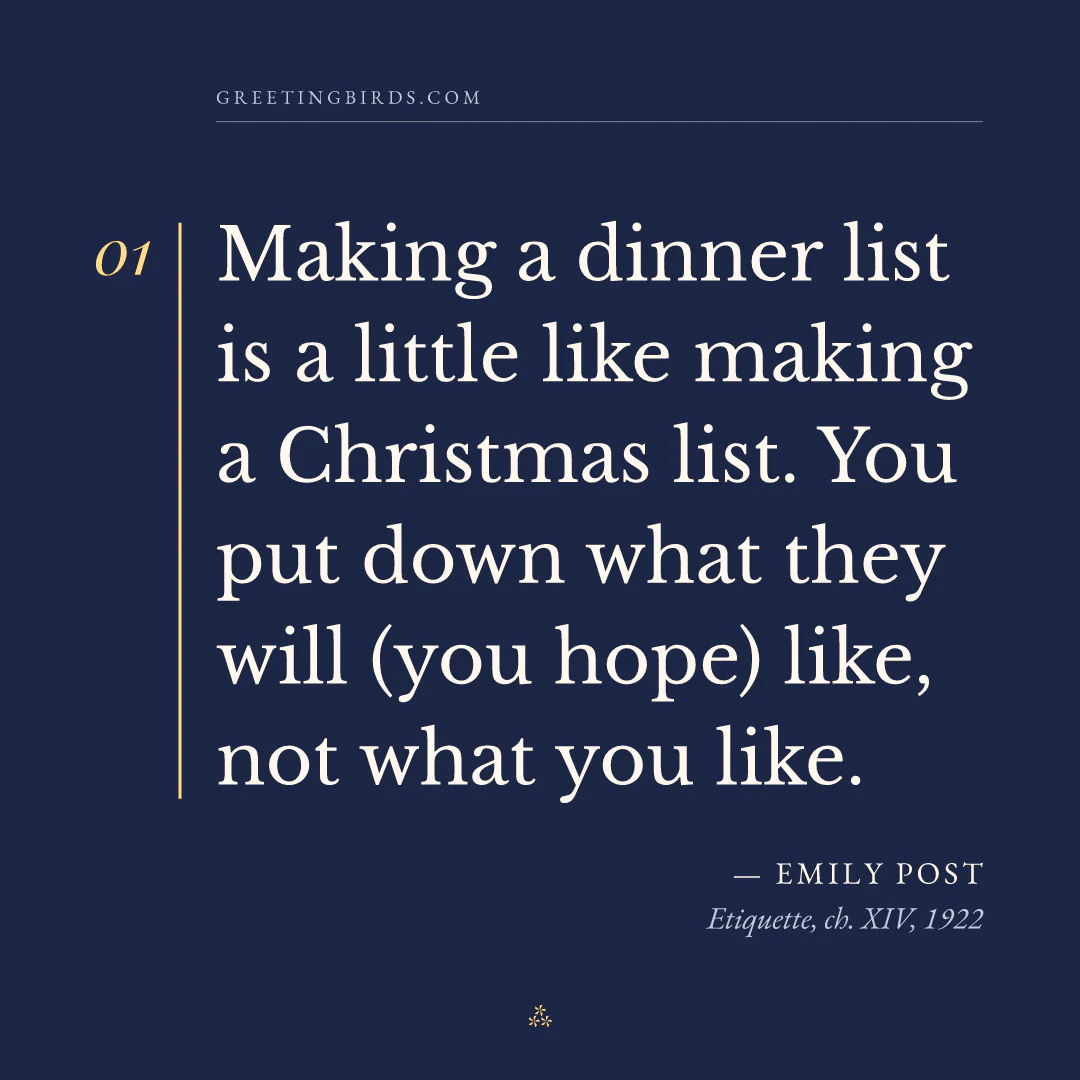
"Making a dinner list is a little like making a Christmas list. You put down what they will (you hope) like, not what you like." — Emily Post, Etiquette, chapter XIV, "Formal Dinners", 1922
Post's comparison works because a greeting, like a gift, is about the receiver. Before you send, read your email as the least-connected person on the list would read it: a customer who bought once, a supplier's accounts clerk, a client of a different faith. If it still feels warm to them, it's ready. For more wording in this tone, see our season's greetings messages.
Out-of-Office Replies and Email Signature Lines
Your out-of-office reply may be the only holiday greeting some people get from you, so make it friendly and useful: the dates you're away, when you're back, and who to contact if it can't wait.
- Thanks for your email. I'm away for the holidays until Monday, Jan 4, and will reply when I'm back. Merry Christmas!
- Our office is closed Dec 24 to Jan 1. For anything urgent, please contact [name] at [email]. Happy holidays!
- I'm offline for the holidays, spending time with family. Back on Jan 4, with fresh coffee and a clear inbox. Season's greetings!
- Thank you for your message. Our team is taking a holiday break and will answer every email from Jan 4. Wishing you a peaceful season.
- Happy holidays! I'm out of the office until Jan 4 with limited access to email. For order questions, [link or phone] is staffed on Dec 28 to 30.
- Signature line: Wishing you a merry Christmas and a happy new year. [Your name] | [Company]
- Signature line: Happy holidays from all of us at [Company]. Our office reopens Jan 4.
Jan 4, 2027 is a Monday; adjust the dates to your own schedule, and remember to switch the reply off when you're back.
Closing Lines and Sign-Offs
The end of a holiday email is where most people freeze. "Best" feels cold, "Love" is wrong for a client, and "Merry Christmas!" twice in four lines looks like you ran out of words.
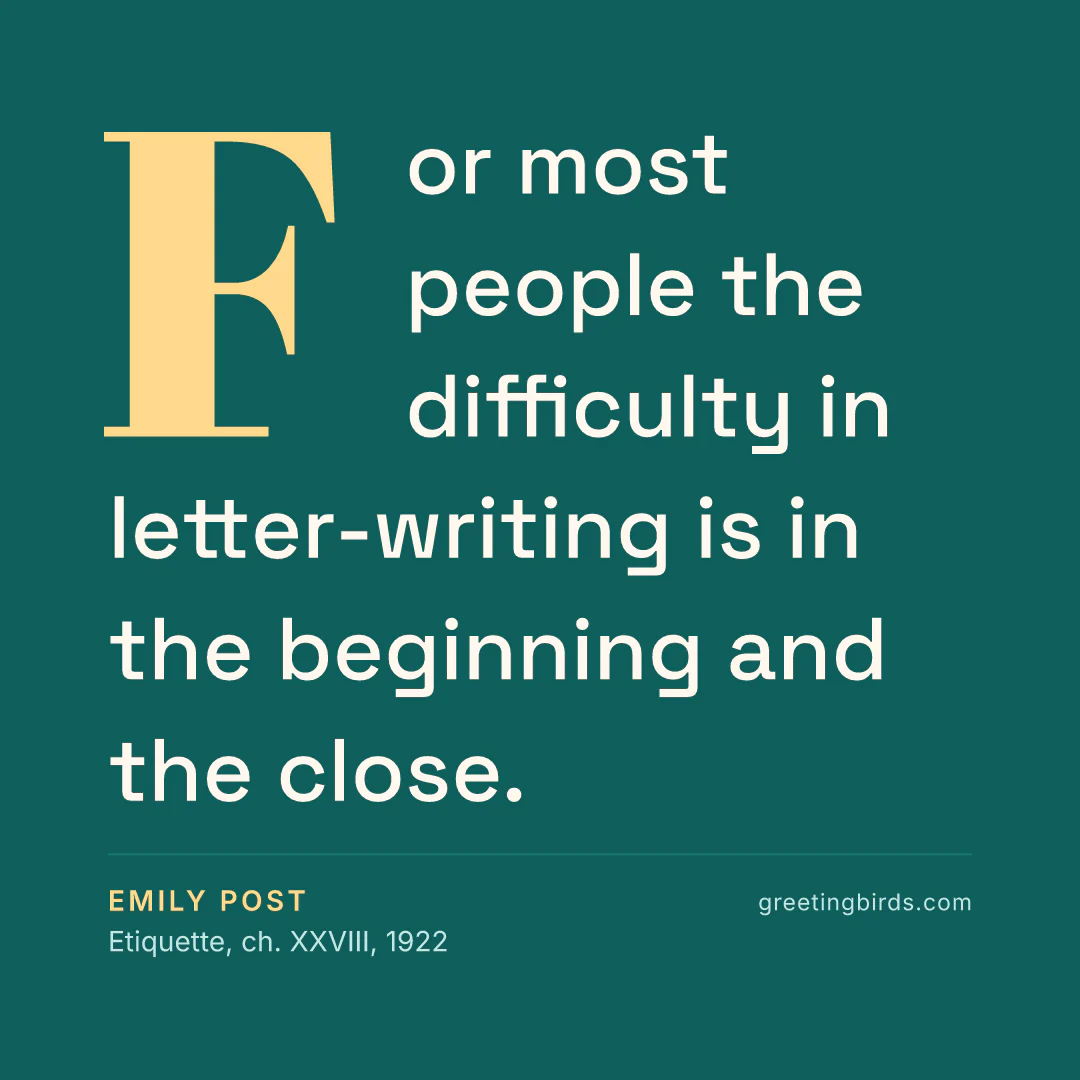
"For most people the difficulty in letter-writing is in the beginning and the close." — Emily Post, Etiquette, chapter XXVIII, "Longer Letters", 1922
Post recommended "Yours truly" or "Yours very truly" for business letters in 1922. Today the equivalents are lighter, but her point stands: decide the close before you write, and the rest of the email gets easier. Use this table:
| Sign-off | Use it for |
|---|---|
| Warm regards / Warmly | Clients you know well; the safest warm choice |
| Best wishes for the holidays | New clients, executives, formal relationships |
| Happy holidays, | Customer lists and mixed audiences |
| Merry Christmas, | One-to-one emails to people you know celebrate it (don't repeat it if the email already says it) |
| With thanks, / Gratefully, | When you're thanking them for something real: a referral, a renewal, a rescue |
| See you in 2027, | Partners and clients you'll speak to again soon |
| [Your name] and the [Company] team | Company-wide emails, so there's still a human name on it |
One last line before your name also helps: "Talk in January", "Enjoy the time off" or "Thank you again" is enough. For handwritten cards rather than emails, our guide to what to write in a Christmas card has sign-offs by recipient.
Mistakes That Make a Holiday Email Look Like Spam
Most failed holiday emails fail on the details, not the wording.
- A broken merge field. "Hi {FIRST_NAME}" or "Hi ," in a thank-you email undoes the thank-you. Send a test to yourself and check a few real records with odd or missing names.
- Everyone in the To or CC field. It exposes your client list and invites reply-all chains. Use BCC for small groups and a proper email tool for larger ones.
- A sales pitch in the greeting. "Merry Christmas! Use code XMAS20" turns a thank-you into an ad. Send the offer separately.
- One big image and no text. Many inboxes block images by default, so an image-only card arrives as a blank email. Put the message in real text and add alt text to the image.
- Sending on Christmas Eve. By Dec 23 many of your readers are already away and their auto-replies answer for them. The first two weeks of December give your email the best chance of being read by a person; for employees, the last working day before the break is the natural moment.
- Religious wording to a list you don't know. Faith-based lines are lovely for clients who share them; for a general list, use the neutral versions above.
- Forgetting who's on the list. Remove clients you've lost touch with in hard circumstances (a cancelled contract, a complaint in progress) or write to them separately.
Holiday Emails and the CAN-SPAM Act
This catches small businesses out every December. In the US, the CAN-SPAM Act covers any email whose "primary purpose" is commercial advertisement or promotion, and the Federal Trade Commission says plainly that "the law makes no exception for business-to-business email." According to the FTC's compliance guide:
- A pure greeting with no offer is generally not a commercial message. Once you add a promotion, discount or product link, the email may count as commercial, and the rules apply.
- For a mixed message, the FTC looks at the subject line: if a reader would likely conclude from it that the email contains an advertisement, it is treated as commercial.
- Commercial emails must have accurate "From" information, a subject line that matches the content, your valid physical postal address, and a clear way to opt out.
- Opt-out requests must be honored within 10 business days, and using an email agency doesn't transfer your responsibility.
- Each separate email in violation can bring penalties of up to $53,088, per the FTC's current guide.
The simplest way to stay clear: keep the holiday greeting a greeting, and if you also want to announce a sale, send that as its own clearly labeled email with your address and unsubscribe link. This is a summary, not legal advice; check the FTC's CAN-SPAM Act: A Compliance Guide for Business if you send to customers at scale, and local rules if your list includes people outside the US.
Quick Answers
Is it okay to say "Merry Christmas" in a business email?
Yes, to a person you know celebrates Christmas, it's warm and normal. For a large or mixed list, "happy holidays" or "season's greetings" is the safer choice because it includes everyone.
When should I send holiday emails to clients?
The first two weeks of December. By Dec 22 or 23 many people have already left for the break. Emails to your own employees can go out on the last working day before the break.
What is a good short holiday message for an email?
"Thank you for working with us this year. Wishing you a merry Christmas and a restful break." Add one specific sentence about the year and your name, and it's done.
Should a company send an email or a card?
Email is fine for most customers and partners. For your biggest clients, a short handwritten card stands out more, and you can still send the email for the office hours and contact details.
How do I end a Christmas email to a client?
With a one-line wish ("Enjoy the time off") and a sign-off like "Warm regards" or "Best wishes for the holidays", followed by your own name, not only the company's.