Merry Christmas in German: Frohe Weihnachten, How to Say It and 23 Wishes
How to say Merry Christmas in German (Frohe Weihnachten), how to pronounce it, du or Sie, and 23 wishes with English translations for family, friends and work.
By GreetingBirds EditorsPublished November 16, 20266 min read
German Christmas greetings look long on paper, but most cards and texts are built from five or six set pieces. Learn those and you can write to a host family in Bavaria, a client in Hamburg or your Oma in Milwaukee without a dictionary.
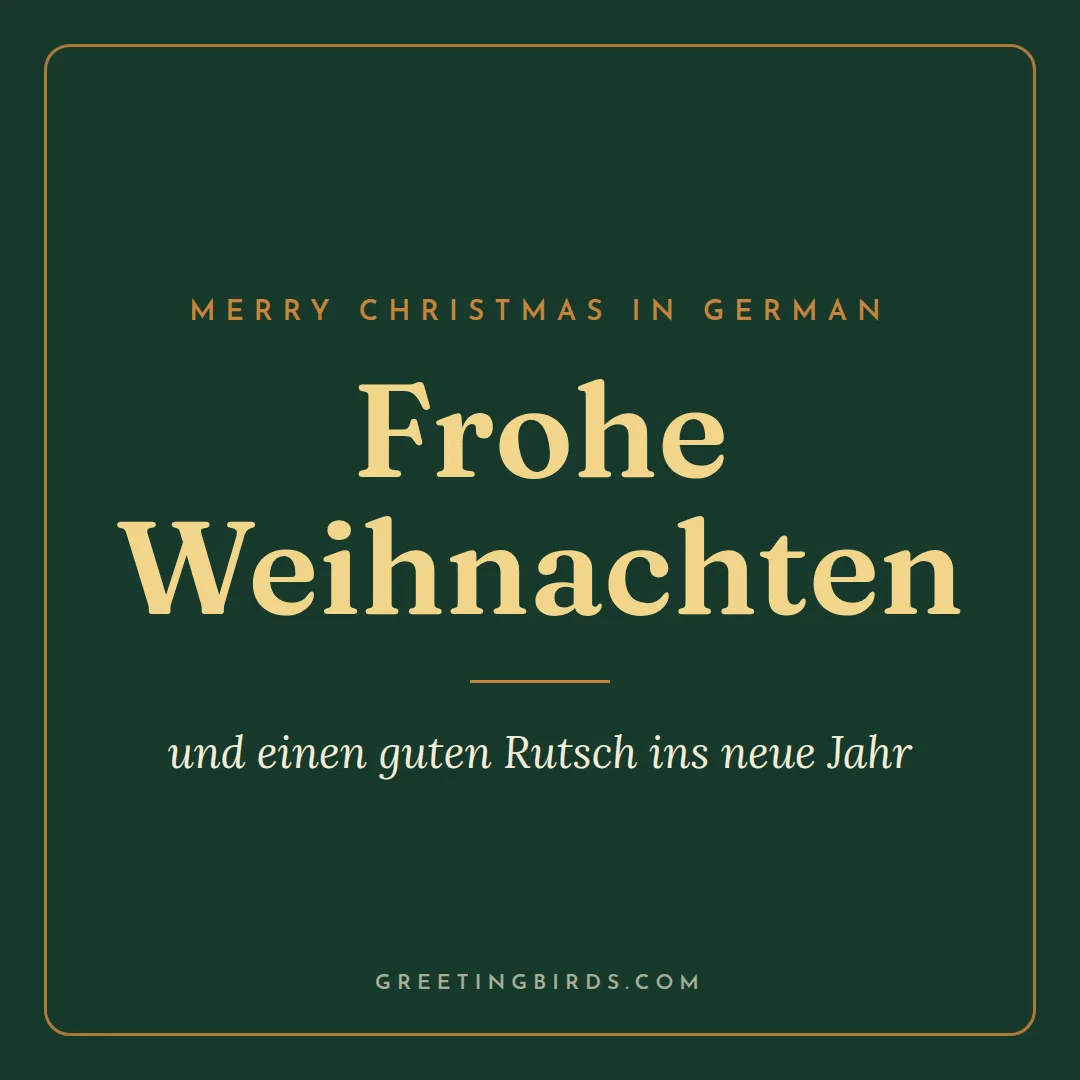
The short answer: "Merry Christmas" in German is Frohe Weihnachten! (FROH-uh VY-nahkh-ten). To add the new year, write Frohe Weihnachten und einen guten Rutsch ins neue Jahr! Two messages you can send as they are:
- Frohe Weihnachten! Ich wünsche dir ein schönes Fest mit deiner Familie. Merry Christmas! I wish you a lovely holiday with your family.
- Wir wünschen Ihnen und Ihrer Familie frohe Weihnachten und ein gesundes neues Jahr. We wish you and your family a merry Christmas and a healthy new year. (Formal.)
Further down are 21 more messages written by our editors, each with an English translation, plus the pronunciation, the choice between du and Sie, the days Germans actually celebrate, and what to say back.
The Greetings Germans Actually Use
| German | Meaning | When to use it |
|---|---|---|
| Frohe Weihnachten! | Merry Christmas | Anyone, any time in the season |
| Fröhliche Weihnachten! | Merry Christmas | Same meaning, slightly more cheerful in tone |
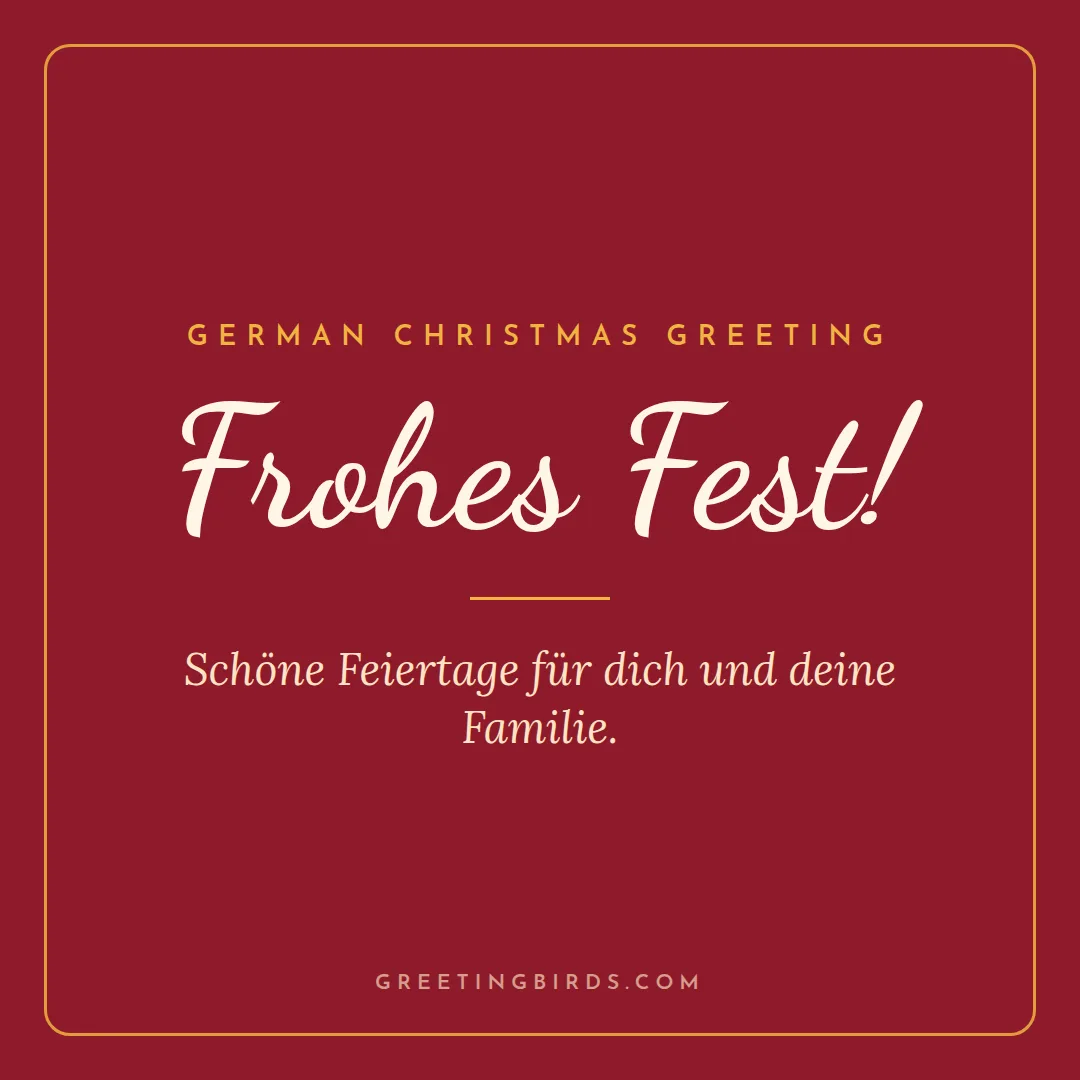
| Frohes Fest! | Happy holiday (literally "merry feast") | Short and friendly, good for a text |
| Schöne Feiertage! | Happy holidays | Neutral; fits coworkers and people who may not celebrate |
| Besinnliche Weihnachten | A peaceful, reflective Christmas | Printed cards and business mail |
| Einen schönen Advent! | Have a lovely Advent | From late November until Christmas Eve |
| Guten Rutsch! | Happy New Year (said before midnight) | From about December 27 to the evening of the 31st |
How to Pronounce Frohe Weihnachten
Say it in five beats: FROH-uh VY-nahkh-ten.
- The German W sounds like an English V, so Weihnachten starts with "vy" as in "vine".
- ei sounds like the English word "eye".
- ch after an a is a soft, breathy sound made at the back of the mouth, like the end of the Scottish "loch". If that is hard, a light "k" is understood.
- The final e in Frohe is a short "uh", never silent.
Du, Sie or Ihr: Pick the Right "You"
| Writing to | Use | "I wish you..." |
|---|---|---|
| Family, close friends, children, fellow students | du | Ich wünsche dir... |
| A client, a teacher, an adult you don't know well | Sie | Ich wünsche Ihnen... |
| A family or a group of friends | ihr | Ich wünsche euch... |
The formal Sie, Ihnen and Ihre always take a capital letter. So do all nouns, which is why Weihnachten, Fest and Familie are capitalized in the middle of a sentence.
For Family and Friends (du and ihr)
- Ich denke an dich und schicke dir eine dicke Umarmung zu Weihnachten. I'm thinking of you and sending you a big hug for Christmas.
- Frohe Weihnachten und alles Liebe aus Chicago! Merry Christmas and lots of love from Chicago! (Swap in your own city.)
- Schöne Feiertage! Lass es dir gut gehen. Happy holidays! Treat yourself well.
- Danke, dass es dich gibt. Frohe Weihnachten! Thank you for being in my life. Merry Christmas!
- Ich wünsche euch ein frohes Fest und ganz viele Plätzchen. I wish you all a merry Christmas and lots of Christmas cookies.
- Fröhliche Weihnachten, Oma und Opa! Wir vermissen euch. Merry Christmas, Grandma and Grandpa! We miss you.
- Frohe Weihnachten, mein Schatz. Mit dir ist jedes Fest schöner. Merry Christmas, my darling. Every holiday is nicer with you.
- Schade, dass wir nicht zusammen feiern können. Nächstes Jahr bestimmt! It's a pity we can't celebrate together. Next year for sure!
For Cards, Clients and Colleagues (Sie)
- Besinnliche Feiertage und einen guten Start ins neue Jahr. Peaceful holidays and a good start to the new year.
- Vielen Dank für die gute Zusammenarbeit in diesem Jahr. Frohe Weihnachten! Thank you for the good collaboration this year. Merry Christmas!
- Mit den besten Wünschen für ein frohes Weihnachtsfest. With best wishes for a merry Christmas.
- Frohe Festtage und erholsame Tage zwischen den Jahren. Happy holidays and a restful time "between the years", the German name for the quiet days from Christmas to New Year.
- Herzliche Weihnachtsgrüße aus den USA. Warm Christmas greetings from the USA.
- Ich wünsche Ihnen schöne Feiertage und freue mich auf die Zusammenarbeit im neuen Jahr. I wish you happy holidays and look forward to working together in the new year.
Short Lines for a Text or a Gift Tag
- Frohes Fest! Happy holidays!
- Schöne Weihnachten! Have a lovely Christmas!
- Frohe Weihnachten euch allen! Merry Christmas to all of you!
- Schönen Heiligabend! Have a lovely Christmas Eve!
- Einen schönen vierten Advent! Happy fourth Sunday of Advent!
- Für dich. Frohe Weihnachten! For you. Merry Christmas! (For a gift tag.)
- Frohe Weihnachten und guten Rutsch! Merry Christmas and happy New Year!
When Germans Celebrate: Three Days, Not One
If you are timing a message, aim for Heiligabend, Christmas Eve. In Germany the evening of December 24 is the heart of the holiday: families share a simple meal and hold the Bescherung, the exchange of gifts. Sausages with potato salad are a favorite Christmas Eve dinner, with the big meal saved for the 25th. A text that arrives in the late afternoon German time on the 24th lands at exactly the right moment.
The weeks before are Advent. Many homes have an Adventskranz, a wreath with four candles, and one more candle is lit on each of the four Sundays before Christmas. That is why Germans wish each other "einen schönen ersten Advent" (a lovely first Advent), then second, third and fourth.
How to Sign Off
| Closing | Meaning | For |
|---|---|---|
| Liebe Grüße | Kind regards (literally "dear greetings") | Friends, relatives, friendly colleagues |
| Alles Liebe | All my love | Close family and friends |
| Herzliche Grüße | Warm regards | Anyone you like but address as Sie |
| Mit freundlichen Grüßen | Yours sincerely | Business letters |
| Dein / Deine + name | Yours | Dein if you are a man, Deine if you are a woman |
What to Say Back
The all-purpose answer is Danke, gleichfalls! ("thanks, same to you"). To a friend say Dir auch! and to someone you call Sie, Ihnen auch! A full reply would be Danke, dir auch frohe Weihnachten!
Mistakes English Speakers Make
- "Froh Weihnachten". The adjective needs its ending: Frohe.
- "Glückliche Weihnachten". A literal "happy Christmas". People will understand, but nobody says it.
- Leaving out umlauts and ß. If your keyboard can't type them, the accepted spelling is ae, oe, ue and ss: "Froehliche Weihnachten", "Liebe Gruesse".
- Saying "Guten Rutsch" on January 1. It is only used before midnight. From New Year's Day on, say "Frohes neues Jahr!"
Writing in more than one language this year? See Christmas wishes in Spanish and, for English lines to go with these, what to write in a Christmas card.
Common Questions
How do you say Merry Christmas in German?
"Frohe Weihnachten!" It is pronounced FROH-uh VY-nahkh-ten. "Fröhliche Weihnachten" means the same and is just as correct.
What does Frohe Weihnachten mean in English?
"Froh" means glad or merry, and "Weihnachten" is Christmas, from an old phrase meaning "holy nights". Together: Merry Christmas.
What is the difference between Frohe and Fröhliche Weihnachten?
None in meaning. "Frohe Weihnachten" is shorter and the one you will see most on cards and hear most in conversation. "Fröhliche Weihnachten" sounds a little more cheerful and old-fashioned.
How do Germans reply to Frohe Weihnachten?
Usually with "Danke, gleichfalls!" (thanks, same to you) or "Dir auch!" to a friend and "Ihnen auch!" to someone you address formally.
Source for the customs described (Christmas Eve gift exchange, the Christmas Eve meal, the Advent wreath): the Wikipedia entry "Christmas in Germany", checked November 2026. The German messages on this page were written by our editors.