12 Grapes Under the Table: The New Year's Eve Rules, Meaning and Origin
How the 12 grapes New Year's Eve tradition works, what eating them under the table means, where it comes from, plus 12 wishes and messages to send.
By GreetingBirds EditorsPublished November 16, 20266 min read
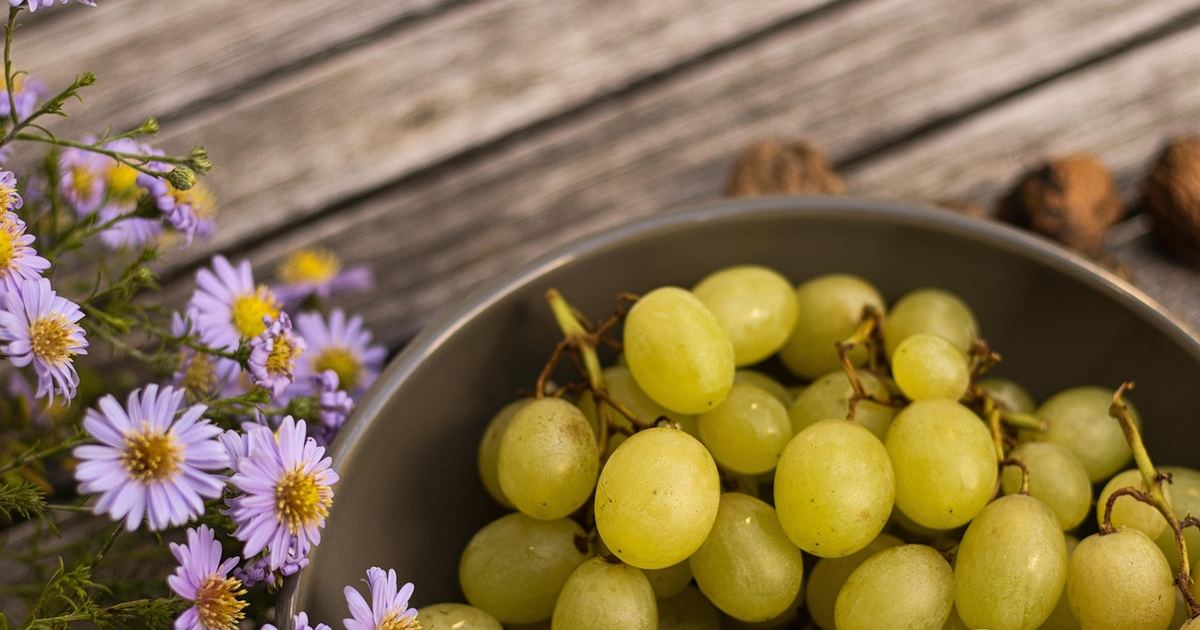
Every December the same question goes around group chats: are we doing the grapes this year, and do we really have to get under the table? Here is how the custom works, what is tradition and what is a newer add-on, and how to run it at your own party without anyone missing midnight.
The short answer: at midnight on December 31 you eat twelve grapes, one with each of the twelve strokes of the clock. Each grape stands for a month of the new year, and finishing all twelve is said to bring good luck and prosperity. Eating them under the table is a recent variation, usually done with a wish for love. In Spanish the custom is called las doce uvas de la suerte, "the twelve grapes of luck".
The Rules in Six Steps
- Count out twelve grapes per person before the countdown starts. A small bowl or a cup each keeps things tidy.
- Choose small, seedless grapes. You will have only seconds for each one. For young children, cut the grapes into quarters lengthwise or give them something softer instead.
- Take your place before midnight. At the table, in front of the TV, or under the table if that is the version you are doing.
- Start with the first stroke of midnight, not during the countdown. One grape per chime, twelve chimes.
- Make a wish with each grape, or think of the month it stands for. Our list of twelve wishes is below.
- Finish with the last chime, then hug whoever is nearest and say ¡Feliz Año Nuevo!
No clock that chimes? Have someone tap a glass twelve times, a few seconds apart, or count the strokes aloud.
Tradition or Trend? What Each Part Is
| Part of the ritual | Where it comes from |
|---|---|
| Twelve grapes at midnight, one per chime | The Spanish tradition, recorded since at least 1895 |
| One grape for each month of the year | Part of the traditional meaning |
| Luck and prosperity for those who finish | Part of the traditional meaning |
| Sitting under the table | A recent variation that spread online; not part of the custom as it is kept in Spain |
| Wishing for love in particular | Goes with the under-the-table version |
So if crawling under the furniture is not for you, you are not breaking any rule. Above the table is the original.
Where the Custom Comes From
The twelve grapes are a Spanish tradition that dates back to at least 1895. It took off in 1909, when vine growers in Alicante, facing more grapes than they could sell after an excellent harvest, promoted the idea of eating them at New Year. People gather to do it in two kinds of places: at home with the family after the New Year's Eve dinner, or in the main square of their town.
The most famous spot is the Puerta del Sol in Madrid, where the clock on the old Post Office building marks the change of year. The chimes have been broadcast on Spanish television since 1962, and much of the country eats its grapes in time with that clock.
From Spain the custom traveled to places with close cultural ties to it. It is kept in Mexico, Puerto Rico, Cuba, the Dominican Republic, Colombia, Venezuela, Peru, Ecuador, Argentina and the Philippines, among others, and in Hispanic communities across the United States.

Twelve Wishes, One for Each Grape
The custom says one grape per month. If you would rather make a wish with each, here is a set our editors wrote so that nobody is left thinking of something at chime number seven. Print it, or read it out before midnight.
| Grape | Month | A wish to make |
|---|---|---|
| 1 | January | A calm start and good health |
| 2 | February | More time with the people I love |
| 3 | March | The courage to begin something new |
| 4 | April | Patience with myself |
| 5 | May | A trip, even a short one |
| 6 | June | Laughter at the table |
| 7 | July | Rest without guilt |
| 8 | August | An old friendship renewed |
| 9 | September | Steady work that I'm proud of |
| 10 | October | A home that feels peaceful |
| 11 | November | Something to be thankful for every day |
| 12 | December | All of us together again next year |
Spanish Words for the Night
| Spanish | Sounds like | Meaning |
|---|---|---|
| Nochevieja | no-cheh-VYEH-hah | New Year's Eve (literally "old night") |
| las doce uvas | lahs DOH-seh OO-vahs | the twelve grapes |
| las campanadas | lahs kahm-pah-NAH-dahs | the strokes of the clock at midnight |
| ¡Feliz Año Nuevo! | feh-LEES AH-nyo NWEH-vo | Happy New Year! |
| ¡Salud! | sah-LOOD | Cheers! |
| suerte | SWEHR-teh | luck |
Keep the mark over the ñ in año. It is a separate letter in Spanish, and the word without it means something quite different.
Messages to Send Before and After Midnight
- Tengo mis doce uvas listas. ¡Feliz Año Nuevo! I have my twelve grapes ready. Happy New Year!
- ¡Feliz Año Nuevo! Que el nuevo año te traiga salud, amor y suerte. Happy New Year! May the new year bring you health, love and luck.
- Doce uvas, doce deseos, y uno de ellos es verte pronto. Twelve grapes, twelve wishes, and one of them is to see you soon.
- ¿Lista para las uvas? Nos vemos debajo de la mesa. Ready for the grapes? See you under the table. ("Listo" if you are writing to a man.)
- Me comí las doce a tiempo. Este año viene con todo. I ate all twelve in time. This year is going to be a big one.
- Got your grapes? Twelve chimes, twelve grapes, no excuses. For the group chat.
- Under the table at midnight. Bring your own grapes. A party invitation line.
- I only managed nine grapes, so the last three months are on you. For a friend, the morning after.

Hosting It: A Short Checklist
- Buy more than you need. Twelve per guest plus a spare bunch, since some will roll away.
- Wash, dry and portion them an hour before. Wet grapes are slippery and the countdown is no time to be counting.
- Agree on the clock. Decide in advance which broadcast or timer you are following so everyone starts together.
- Clear the floor if people are going under the table, and keep glasses off the edge.
- Have a toast ready for afterward. A simple one: "To the year behind us and the twelve months ahead."
For more to write in a New Year card, see New Year wishes for cards, and for longer Spanish messages, New Year greetings in Spanish. Another year-end ritual built around wishes is the 13 wishes ritual.
Questions About the Twelve Grapes
What does eating 12 grapes under the table mean?
It is a recent twist on the Spanish New Year's Eve custom of eating twelve grapes at midnight, one for each chime of the clock. In the under-the-table version, popular online, the grapes are eaten while sitting beneath a table and the wish is usually for luck in love.
Do you have to be under the table for the 12 grapes to work?
No. In the traditional Spanish custom people eat the grapes standing in a town square or sitting at home after dinner. The table is an optional extra added in recent years.
What do the 12 grapes represent?
Each grape, and each stroke of the clock, stands for one of the twelve months of the coming year. Eating all twelve is said to bring a year of good luck and prosperity.
Where does the 12 grapes tradition come from?
From Spain. It dates back to at least 1895 and became widely popular in 1909, when grape growers in Alicante promoted it to sell a bumper harvest. It has since spread to much of Latin America and to Hispanic communities in the United States.
Source for the history and meaning of the custom (the 1895 and 1909 dates, Alicante, the Puerta del Sol clock, the 1962 broadcast, the countries where it is kept): the Wikipedia entry "Twelve Grapes", checked November 2026. That entry does not mention the under-the-table variation, which we describe here as a recent addition. The wishes and messages on this page were written by our editors.