
New Year Wishes in Spanish: 76 Lines to Copy, From the Twelve Grapes to Your Reply
76 New Year wishes in Spanish with English: family, partner, friends, work (usted), twelve-grape wishes, replies, and the año/ano spelling trap.
By GreetingBirds EditorsPublished October 17, 202616 min read
On January 1, 1896, the Madrid newspaper La Correspondencia de España reported that at exactly midnight the government ministers "saludaron [...] la entrada del nuevo año comiendo ricas uvas": they greeted the new year by eating grapes. That habit became the twelve grapes, and it explains a lot about New Year wishes in Spanish. They're said out loud at midnight, they come in twelves, and they nearly always hope for something specific: health, work, love, luck.
The short answer: "Happy New Year" in Spanish is ¡Feliz Año Nuevo! (feh-LEES AH-nyoh NWEH-voh). Shorter and just as common is ¡Feliz año! Spell it with the ñ, always (more on that below). If you need a line to copy right now, use one of these:
- ¡Feliz Año Nuevo! Que 2027 te traiga salud, paz y muchas razones para sonreír. Happy New Year! May 2027 bring you health, peace and lots of reasons to smile.
- ¡Feliz año! Te deseo doce meses llenos de cosas buenas. Happy New Year! I wish you twelve months full of good things.
- ¡Próspero Año Nuevo para ti y para toda tu familia! A prosperous New Year to you and your whole family!
- Que entres al año con el pie derecho. ¡Feliz 2027! May you start the year on the right foot. Happy 2027!
- Gracias por estar en mi vida un año más. ¡Feliz Año Nuevo! Thank you for being in my life for one more year. Happy New Year!
Año, Not Ano: The One Spelling Mistake to Avoid
Año means "year." Ano, without the little wave on the n, means "anus." So "Feliz ano nuevo" wishes someone a happy new anus. People who speak Spanish will understand what you meant, and many will laugh. On a card you've written by hand, or a message to someone's grandmother, it's worth the extra second. The ñ (called eñe) is its own letter in Spanish, not an n with decoration.
| Where you're typing | How to get the ñ |
|---|---|
| iPhone or Android | Press and hold the n key, then slide to ñ. |
| Windows | Hold Alt and type 164 on the number pad (Alt + 165 gives Ñ), or add the Spanish keyboard in Settings. |
| Mac | Press Option + n, let go, then press n. |
| No way to type it | Write ¡Feliz 2027! or ¡Felices fiestas! Neither needs an ñ. |
Two smaller points. Spanish opens an exclamation with an upside-down mark (¡) as well as closing it (!). In quick texts lots of native speakers skip the opening one, but on a card it looks right to include it. And you'll see both Feliz Año Nuevo and feliz año nuevo; capitals read as the name of the holiday and look more festive on a card.
What December 31 Is Called (and Why Saint Sylvester Keeps Turning Up)
English has "New Year's Eve." Spanish has several names, and which one a person uses tells you a little about where they're from. Knowing them helps when someone texts you on the 31st and you're not sure what they mean.
| Word | What it means and who says it |
|---|---|
| Nochevieja | "Old night": the evening of December 31, the usual word in Spain. |
| Fin de Año | "End of the year": common across Latin America for the night and the party. |
| Año Viejo | "The old year": the night itself, and in several Latin American countries the life-size doll that is burned at midnight. |
| San Silvestre | December 31 is the feast day of Pope Sylvester I, so the night is also la noche de San Silvestre. |
| Las campanadas | "The chimes": the twelve strokes of midnight, and the moment to eat the grapes. |
| Año Nuevo | January 1, New Year's Day. |
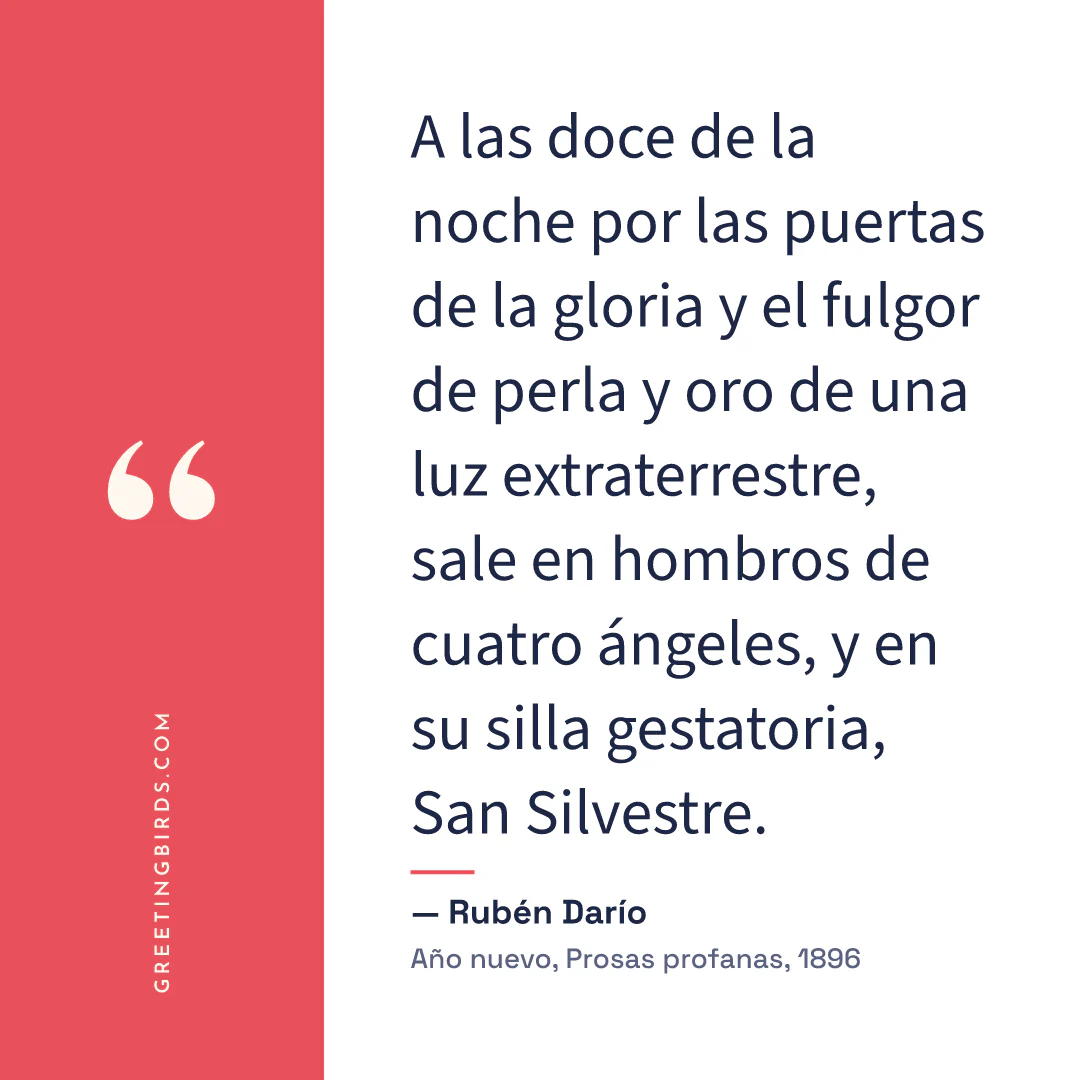
Saint Sylvester is the hero of the most famous New Year poem in Spanish. The Nicaraguan poet Rubén Darío put "Año nuevo" in Prosas profanas, the 1896 book (printed in Buenos Aires) that made his name. It opens with the saint carried out of heaven at the stroke of twelve:
"A las doce de la noche por las puertas de la gloria
Y el fulgor de perla y oro de una luz extraterrestre,
Sale en hombros de cuatro ángeles, y en su silla gestatoria,
San Silvestre."— Rubén Darío, "Año nuevo," Prosas profanas (1896)
In English, roughly: "At twelve midnight, through the gates of glory and the pearl-and-gold blaze of an unearthly light, Saint Sylvester comes out on the shoulders of four angels, in his carried throne." The rest of the poem turns the year into an archer who shoots one arrow for every hour, and ends with the saint blessing the world as January arrives by ship. It's a grand poem rather than a cozy one, so it suits a card for a Spanish teacher, a reader or someone from Nicaragua, who will very likely know it. Copy the first stanza, add the poet's name, and write one plain line of your own below it. The full text is on Spanish Wikisource.
Twelve Grapes, Twelve Wishes
The custom is called las doce uvas de la suerte, the twelve lucky grapes: one grape on each stroke of midnight, one for each month. The 1896 report above shows Madrid already doing it in the 1890s; it spread much further in 1909, when grape growers around Alicante had more fruit than they could sell and promoted it. Since 1962 Spanish television has broadcast the chimes from the clock of the Royal House of the Post Office in Madrid's Puerta del Sol. Today grapes are eaten at midnight in Mexico, Colombia, Peru, Cuba, Puerto Rico, the Dominican Republic, Venezuela, Argentina and other countries, and by many Hispanic families in the US.
So a wish for each month fits the night. Send all twelve as one message before midnight, or pick the month that suits the person: a new job in March, a wedding in June, a baby due in October.
- Enero: que empiece con calma y con ganas. January: may it start calm and eager.
- Febrero: mucho amor, y no solo el día 14. February: lots of love, and not only on the 14th.
- Marzo: valor para empezar lo que llevas tiempo pensando. March: courage to start what you've been thinking about for a while.
- Abril: que te llueva buena suerte. April: may good luck rain on you.
- Mayo: salud para ti y para tu mamá. May: health for you and for your mom.
- Junio: un viaje, aunque sea cortito. June: a trip, even a short one.
- Julio: risas largas y noches tranquilas. July: long laughs and quiet nights.
- Agosto: que el trabajo te deje respirar. August: may work give you room to breathe.
- Septiembre: un buen comienzo, como el primer día de clases. September: a fresh start, like the first day of school.
- Octubre: la cosecha de todo lo que sembraste. October: the harvest of everything you planted.
- Noviembre: gente buena a tu alrededor. November: good people around you.
- Diciembre: llegar al final del año con el corazón contento. December: reaching the end of the year with a happy heart.
A practical tip if you're eating them yourself: the chimes come fast, so small seedless grapes make it much easier, and many families peel them in advance.
Short Lines for WhatsApp, Instagram or a New Year Image
These are short enough to sit on top of a photo or GIF, or to send at 12:01 when everyone's phone is buzzing at once.
- ¡Feliz 2027! Que sea tu año. Happy 2027! May it be your year.
- Año nuevo, vida nueva. New year, new life. (A common saying.)
- Doce campanadas y todas para ti. ¡Feliz año! Twelve chimes, and every one is for you. Happy New Year!
- Brindo por lo que viene. Here's to what's coming.
- Adiós, 2026. Hola, 2027. Goodbye, 2026. Hello, 2027.
- Con las uvas en la boca: ¡feliz año! With my mouth full of grapes: happy New Year!
- Un abrazo de medianoche desde aquí. ¡Feliz Año Nuevo! A midnight hug from here. Happy New Year!
- Que lo mejor de 2026 se quede y lo demás se vaya. May the best of 2026 stay and the rest go.
For Mamá, Papá, the Abuelos and the Rest of the Table
Family messages in Spanish lean on warmth more than cleverness. If you're writing to grandparents, a slightly formal touch (querida abuela, dear grandma) goes a long way, even though you'll still use tú with most of them.
- Mamá, gracias por otro año de cuidarnos a todos. Que este sea para ti. Mom, thank you for another year of looking after all of us. May this one be for you.
- Papá, que el año nuevo te traiga salud y menos preocupaciones. Te quiero. Dad, may the new year bring you health and fewer worries. I love you.
- Querida abuela, el mejor regalo del año es tenerte con nosotros. ¡Feliz Año Nuevo! Dear Grandma, the best gift of the year is having you with us. Happy New Year!
- Abuelo, que este año sigamos escuchando tus historias. ¡Feliz año! Grandpa, may we keep hearing your stories this year. Happy New Year!
- Hermanita, que 2027 te dé todo lo que llevas tiempo buscando. Little sister, may 2027 give you everything you've been looking for.
- Hermano, otro año juntos aguantando a la familia. ¡Salud! Brother, another year of putting up with the family together. Cheers!
- A mis suegros: gracias por recibirme siempre como en casa. Feliz Año Nuevo. To my in-laws: thank you for always making me feel at home. Happy New Year.
- Que en 2027 la mesa esté llena y no falte nadie. May the table be full in 2027, with no one missing.
That last line is the one to use if the family is spread out or someone was ill this year. "Que no falte nadie" (may no one be missing) is a phrase many Spanish-speaking families say at New Year dinners.
For Your Partner at Midnight
Midnight is loud, so the message your partner reads at 12:05 can be short. Keep whatever nickname you already call each other (mi amor, mi cielo, gordo, flaca); trying out a brand-new one on New Year's Eve tends to read like a telenovela script.
- Mi amor, tú eres mi mejor deseo cumplido. ¡Feliz Año Nuevo! My love, you're my best wish come true. Happy New Year!
- Doce uvas no alcanzan para todo lo que quiero vivir contigo. Twelve grapes aren't enough for everything I want to live with you.
- Empezar el año a tu lado ya es buena suerte. Starting the year next to you is already good luck.
- Mi vida, otro año más de elegirte. ¡Feliz año! My love, one more year of choosing you. Happy New Year!
- Aunque estemos lejos esta noche, mi primer pensamiento del año es para ti. Even if we're apart tonight, my first thought of the year is of you.
- Que en 2027 nos sobren abrazos y nos falten excusas. May we have hugs to spare in 2027, and no excuses.
For Friends, Including the Ones Who Moved Away
- ¡Feliz año, amiga! Que este traiga más cafés juntas y menos audios de diez minutos. Happy New Year, friend! May this one bring more coffees together and fewer ten-minute voice notes.
- Por otro año de amistad, de risas y de aguantarnos. ¡Salud! To another year of friendship, laughs and putting up with each other. Cheers!
- Aunque nos separen kilómetros, empiezo el año pensando en ti. Even with miles between us, I'm starting the year thinking of you.
- Que 2027 sea el año en que por fin nos vemos. May 2027 be the year we finally see each other.
- Gracias por estar en las buenas y en las malas. Feliz Año Nuevo. Thank you for being there in good times and bad. Happy New Year.
- Te deseo un año tan bueno como tú, que ya es mucho decir. I wish you a year as good as you are, which is saying a lot.
- Nuevo año, mismo grupo de amigos, misma locura. ¡Feliz año a todos! New year, same group of friends, same craziness. Happy New Year, everyone! (for the group chat)
Writing to a male friend, switch amiga to amigo and juntas to juntos; for a mixed group, Spanish uses the masculine plural (juntos, todos).
For Work: Usted, Ustedes and the Office Group
With a boss, a client or anyone you'd call señor or señora, use the formal usted (verb forms like tenga, le). For a whole team or a client company, use ustedes. Our Christmas wishes in Spanish page explains the tú/usted choice in more detail; these lines already have it sorted.
- Que el 2027 le traiga buenos proyectos y buenos resultados. Ha sido un gusto atenderle. May 2027 bring you good projects and good results. It's been a pleasure serving you. (to a client)
- A todo el equipo: lo que logramos en 2026 fue gracias a ustedes. Vamos por un 2027 igual de bueno. To the whole team: what we achieved in 2026 was thanks to you. Here's to an equally good 2027. (from a manager)
- Que tenga un excelente inicio de año, usted y toda su familia. Have an excellent start to the year, you and your whole family. (to a boss)
- Gracias por un año de buen trabajo en equipo. Nos vemos en enero. Thanks for a year of good teamwork. See you in January.
- ¡Feliz año, compañeros! Nos vemos el lunes 4 con energía (y café). Happy New Year, coworkers! See you on Monday the 4th with energy (and coffee).
- Con nuestros mejores deseos para el año nuevo, de parte de todo el equipo. With our best wishes for the new year, from the whole team. (email signature or company card)
For more on English-language versions of these, see our professional New Year wishes for clients and teams.
When the Year Was Hard
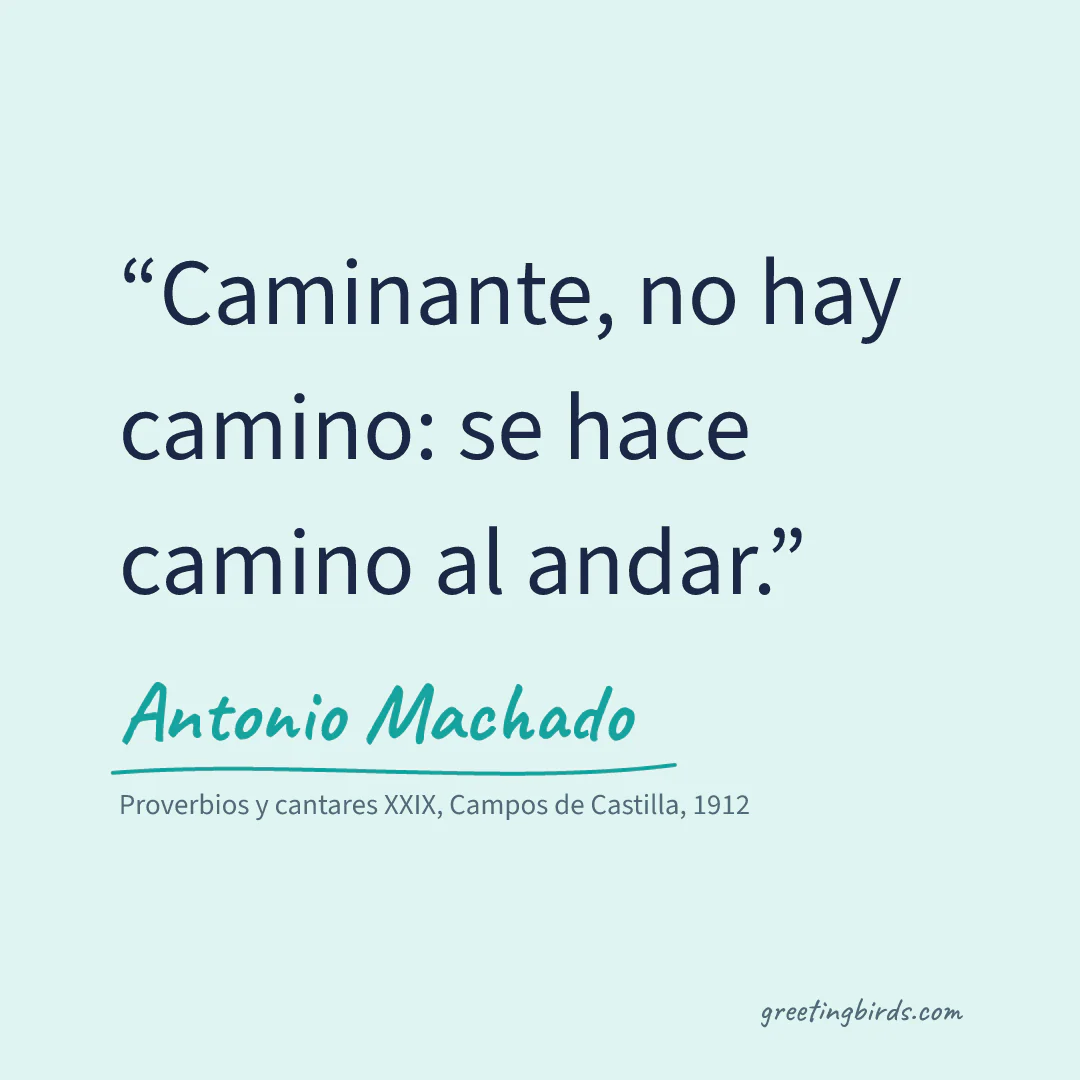
Not everyone ends December ready to celebrate. For someone who lost a person, a job or their health this year, a gentle wish works better than "the best year ever." Antonio Machado's lines from "Proverbios y cantares," in his 1912 book Campos de Castilla, are some of the best-known verses in Spanish, and they fit a fresh start without pretending the old year didn't happen:
"Caminante, son tus huellas
el camino, y nada más;
caminante, no hay camino:
se hace camino al andar."— Antonio Machado, "Proverbios y cantares" XXIX, Campos de Castilla (1912)
In English: "Traveler, your footprints are the road, and nothing more; traveler, there is no road: you make the road by walking." For a card, the last line alone is enough: se hace camino al andar, the road is made by walking. It tells someone they don't need the whole year figured out, only the next step. Most adults who went to school in Spain or Latin America will recognize it, and many know it from Joan Manuel Serrat's song setting.
- No te deseo un año perfecto, solo uno más tranquilo. Aquí estoy. I'm not wishing you a perfect year, just a calmer one. I'm here.
- Sé que este año fue difícil. Que el que empieza te trate con cariño. I know this year was hard. May the one beginning treat you kindly.
- Paso a paso, como dice Machado: se hace camino al andar. Un abrazo fuerte. Step by step, as Machado says: the road is made by walking. A big hug.
- Esta noche levanto la copa por ti y por quien nos falta. Tonight I lift my glass to you and to the one who isn't here.
- Que 2027 te devuelva un poco de lo que 2026 te quitó. May 2027 give you back a little of what 2026 took from you.
- No tienes que empezar con fuerza. Basta con empezar. Feliz año. You don't have to start strong. Just starting is enough. Happy New Year.
Mexican, Spanish and Other Regional Ways to Say It
¡Feliz Año Nuevo! works everywhere, so this is the flavor on top, not a replacement. Use a regional word only with someone from that place, or it can sound like a costume.
- ¡Feliz año, compadre! Que este año nos vaya chido. Happy New Year, buddy! May this year go great for us. (Mexico: "chido" means cool or great)
- ¡Feliz entrada de año! Que las uvas te traigan suerte. Happy start of the year! May the grapes bring you luck. (Spain often wishes a happy "entrance" into the year)
- ¡Feliz salida y entrada de año a toda la familia! A happy exit from the old year and entrance into the new to the whole family! (Spain, usually sent a few days before)
- ¡Feliz año, parcero! Que vengan cosas buenas. Happy New Year, buddy! Bring on the good things. (Colombia)
- ¡Feliz año, che! Nos vemos en el verano. Happy New Year, pal! See you in the summer. (Argentina and Uruguay, where January is midsummer)
- ¡Feliz año, mi gente! Que 2027 llegue con salud y con música. Happy New Year, my people! May 2027 come with health and music. (warm all-purpose Caribbean feel)
Customs differ too, which is a nice detail to mention in a message. In Chile, people who want to travel walk around the block carrying a suitcase, wear yellow underwear and eat lentils for luck. In Ecuador, men dress up as the "widows" of the old year and ask drivers for coins. In El Salvador and elsewhere, families burn a life-size Año Viejo doll made from old clothes and paper at midnight, to get rid of what they didn't like about the year.
How to Answer When Someone Says "¡Feliz Año!"
Someone wished you a happy New Year in Spanish and you want to answer properly. The easiest reply is one word, ¡Igualmente! (likewise). These go a little further:
- ¡Igualmente! Que tengas un año precioso. Likewise! Have a lovely year.
- ¡Feliz año para ti también! Happy New Year to you too!
- Gracias, te deseo lo mismo, o más. Thank you, I wish you the same, or more.
- ¡Muchas gracias! Un abrazo grande para ti y los tuyos. Thank you so much! A big hug to you and your family.
- ¡Gracias! Que se cumplan las doce uvas. Thanks! May all twelve grapes come true.
- Igualmente, y gracias por acordarte de mí. Same to you, and thank you for thinking of me.
- Muchas gracias, igualmente para usted y su familia. Thank you very much, the same to you and your family. (formal: boss, client, older neighbor)
- ¡Gracias, amigo! Este año sí nos vemos. Thanks, friend! This year we'll definitely see each other.
Christmas and New Year in One Line
In Spanish-speaking homes the holidays stretch from December 24 to Día de Reyes on January 6, so a single card often wishes for both. The classic is ¡Feliz Navidad y próspero Año Nuevo! Three more, and the full set is on our Spanish Christmas wishes page:
- Felices fiestas y un 2027 con mucha salud para toda la familia. Happy holidays and a very healthy 2027 to the whole family.
- De la Nochebuena a la Nochevieja, que no te falten abrazos. From Christmas Eve to New Year's Eve, may you never run short of hugs.
- Feliz Navidad, feliz año y que los Reyes se porten bien contigo. Merry Christmas, Happy New Year, and may the Three Kings treat you well.
Build Your Own in Three Pieces
Most Spanish New Year messages follow the same shape, and once you see it you can write your own:
- The greeting: ¡Feliz Año Nuevo! / ¡Feliz 2027! / Querida [name],
- One wish, starting with "que": Que + the verb in its wish form: que tengas (may you have), que te traiga (may it bring you), que se cumplan (may they come true). Name one or two concrete things: salud (health), trabajo (work), amor, paz, un viaje.
- The sign-off: Un abrazo (a hug), Con cariño (with love), Te quiero (I love you), or for work, Saludos cordiales (kind regards).
Worked example. Say your friend Lucía is starting nursing school in January. Greeting: ¡Feliz Año Nuevo, Lucía! Wish: Que tengas mucha suerte en la escuela de enfermería (good luck at nursing school). Sign-off: Un abrazo enorme. Put together: "¡Feliz Año Nuevo, Lucía! Que tengas mucha suerte en la escuela de enfermería. Un abrazo enorme." It's short, it's correct, and it's about her.
A few things that go wrong when people translate word for word:
- "Feliz nuevo año" isn't wrong Spanish, but it's not the greeting. The set phrase is Feliz Año Nuevo, adjective after the noun.
- "Tenga un feliz año nuevo" with a friend sounds stiff; with friends it's que tengas.
- Machine translators often drop the ñ or turn "Happy New Year's Eve" into something odd. For December 31 itself, say ¡Feliz Nochevieja! (Spain) or ¡Feliz fin de año! (Latin America).
Timing: in Spain and much of Latin America the wishes flow from the grapes onward, so 12:00 to 12:30 a.m. local time is the moment. If your family is in Mexico City, midnight there is 1 a.m. in New York and 10 p.m. in Los Angeles, so check the clock before sending. Wishes are still fine for the first days of January; after about January 6 (Día de Reyes), a "feliz año" starts to sound late. Writing for New Year's Eve in English too? Our New Year's Eve wishes by the hour are sorted from the afternoon text to the midnight toast.
Quick Questions
How do Mexicans say Happy New Year?
The same as everyone else: ¡Feliz Año Nuevo! or ¡Feliz año! Among friends you'll also hear it with a Mexican word added, like "¡Feliz año, compadre!" or "Que este año nos vaya chido."
How do you say "Have a happy New Year" in Spanish?
Que tengas un feliz Año Nuevo to one person you'd call tú, que tenga un feliz Año Nuevo formally, and que tengan un feliz Año Nuevo to a group.
How do you say "best wishes for the new year" in Spanish?
Mis mejores deseos para el año nuevo. From a couple, a family or a company: nuestros mejores deseos para el año nuevo.
What do you reply to "Feliz Año Nuevo"?
¡Igualmente! (likewise) or ¡Feliz año para ti también! (Happy New Year to you too). For a boss or an older person: "Muchas gracias, igualmente para usted y su familia."